
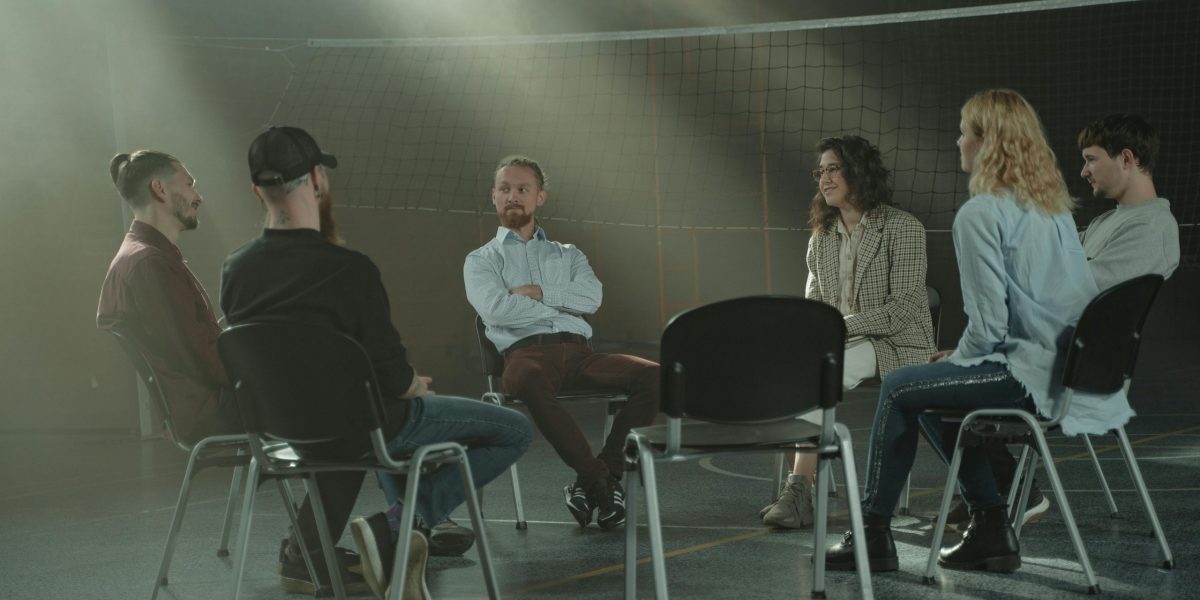
In today’s fast-changing and complex world, teams are the true engines of transformation. But for a team to become truly autonomous, agile, and resilient, it often needs guidance, especially at the beginning of its journey. That is where the role of a team coach becomes crucial.
A team coach is not a permanent fixture. Their mission is not to lead or to supervise but to empower, align, and ultimately disappear.
From chaos to clarity: the beginning of the journey
When a team starts working together, especially in multicultural or cross-functional contexts, there is often confusion, mistrust, or a lack of shared vision. The team coach enters this space as a facilitator of connection and clarity. They help the group:
These foundational steps are crucial. Without them, collaboration is superficial, and people revert to personal agendas or silos.
Establishing the rules of the game
Once the team knows where it is going, the team coach helps it design the “how”:
A strong team coaching process ensures that everyone feels at ease, that differences are embraced, and that people can flourish. The team coach becomes the guardian of this space.
The team coach as a mirror
Throughout the process, the team coach acts as a mirror. They reflect back what they observe.
One important aspect the coach observes is silence. What happens when someone is physically present but does not contribute? How can the team respond?
The active participation in a team is often self-rewarding. However, when a member remains quiet or withdrawn, it may signal deeper dynamics: fear, confusion, lack of clarity, or even disconnection. The team coach makes this silence visible—not by forcing participation, but by naming what is happening in the group and inviting reflection. This might include noticing body language, emotional cues, or subtle forms of disengagement.
The coach creates space for all voices to emerge and helps the team explore what might be holding someone back. In doing so, they open the door for richer inclusion, stronger cohesion, and a more honest team dynamic.
They reflect back what they observe:
By bringing these dynamics to light in a safe and constructive way, the team coach accelerates awareness and evolution.

Building radical collaboration
At the heart of team coaching is the idea of radical collaboration.
One useful tool the team coach may introduce in this phase is William Glasser’s quality world diagram, also known as the results diagram. This tool helps the team explore what types of actions, behaviors, or mindsets tend to bring positive or negative results. The coach may pose reflective questions like: What have you seen today/in this exercise tends to produce negative outcomes? And what consistently brings positive ones?
By mapping these patterns, the team becomes more conscious of its own impact and can make collective agreements to shift toward more constructive dynamics.
In high-performing teams:
The team coach fosters these behaviors through structured sessions, creative exercises, and rituals that promote openness and connection.
Another useful practice the team coach may introduce is the “talking stick”. This simple yet effective tool is used in teams where some voices tend to dominate or others remain silent. During specific rounds of dialogue, only the person holding the talking stick may speak, ensuring that each member has a space to express themselves. Over time, this practice often becomes an autonomous habit of the team, strengthening the group’s listening culture and sense of mutual respect.
Self-managed, agile teams
The final goal of team coaching is to render itself obsolete.
A well-functioning, self-managed team is built on a solid foundation of:
These elements allow the team to thrive without relying on external direction. The team coach supports the development of these foundations early on, so the team can eventually lead itself with clarity and cohesion.
The coach guides the team to a place where:
Depending on the organization’s maturity, the level of autonomy can vary. In traditional models, some decisions may still require a +1 level manager. But in organizations inspired by Frederic Laloux’s Reinventing Organizations — so-called Teal Organizations — the goal is even more ambitious.
The “Teal” horizon: when leadership dissolves
In Teal organizations the team coach can play a key role in building empowered teams, if that is the organization’s intention. They can support the first steps of the transformation, help launch the shift, and accompany the team as it adopts new ways of working. An autonomous, self-managed team no longer needs the constant presence of the team coach. However, the coach can take care of medium-term follow-up, for example, by facilitating a check-in session every six months or when a specific need arises that requires an external perspective or facilitation.
In “Teal” organizations:

Here, the team coach acts almost like a gardener. They water the soil, ensure sunlight and nutrients, but they do not control the growth. They observe, adjust, challenge, and nourish.
The result? A team that doesn’t depend on a manager to function. A team where every member takes ownership. A team that regenerates itself.
The empowerment mindset: key principles and phases
Why empowerment matters today
The traditional contract between employer and employee is fading. Loyalty no longer guarantees job security, and top-down control limits potential. In organizations where micromanagement is present—that is, where managers exercise excessive control over subordinates—only a small portion of people’s true capabilities is actually utilized.
Empowerment is about giving people the authority and responsibility to make decisions. It’s about unlocking knowledge, experience, and intrinsic motivation.
Does empowerment really work?
Yes. Organizations that give their people more control and responsibility over their own work see up to 10.3% more return on sales than those that don’t involve their teams.
The 3 pillars of empowerment
The 3 phases of empowerment
Delegation traps to avoid
Two common pitfalls in leadership are:
True leadership is not about being on stage. It’s about enabling others to shine.

The functions of the team coach
A team coach is not an entertainer. While team building can be the starting point of a coaching process, or serve as a diagnostic tool to assess a team’s maturity, it should not be reduced to a playful activity meant to distract or forget problems. When done well, team building is a form of experiential learning—not just a trip to an amusement park together, but a moment of reflection and evolution.
To reach this level of maturity, the team coach plays several key roles:
The 6 systemic laws: how the team coach supports balance
Every team is a system within an organization, following natural laws. When one of these systemic laws is violated, imbalance arises—leading to tension, inefficiency, or disconnection. The team coach helps detect these violations, observes them, challenges them, and brings them to the table. Through this awareness, the team can consciously redesign its norms and behaviors to restore balance and evolve.
Here are the 6 laws and how they can show up in real teams:

4. Law of giving and receiving – Contributions should be acknowledged. When appreciation, recognition, or constructive feedback is missing or uneven, team spirit erodes. A frequent violation: a leader expects commitment but never thanks or celebrates achievements.
5. Law of place – Everyone has a role, and clarity around it avoids overlap or confusion. This law is violated when someone steps into a responsibility without team alignment—for example, assuming the role of decision-maker in a domain where another is accountable. In empowered teams, this law is respected through dialogue and role clarity.
6. Law of recognition – Everyone deserves to be seen for who they are and what they bring. Overlooking someone’s effort or ideas—especially repeatedly—causes withdrawal or passive resistance. A sign of violation: ideas from certain members are dismissed or appropriated by others.
When these laws are not respected, teams unconsciously suffer. The team coach brings awareness to these dynamics and catalyzes transformation. Through coaching, the team can adjust behaviors, update agreements, and create new relational patterns that honor systemic balance.
Has this ever happened to you? How did you feel
The consequences of team coaching
Organizations that invest in team coaching witness tangible and intangible benefits:
Tangible results:
Intangible results:
In essence, the team coach ignites a transformation that keeps evolving even after they’ve gone.
The end is just the beginning
The journey of team coaching is not linear. It spirals. As the team evolves, it may invite the coach back to tackle new challenges or to refresh its dynamics. But the ultimate success of a team coach is to become invisible.
When the team meets, laughs, disagrees, plans, and solves without friction or hierarchy…
When every member feels they can lead and be led…
When the group flows as one organism, adaptable and resilient…
That’s when the team coach knows: their job is done.
Be more circle.
If you want to learn more about my services to empower and make teams more effective through team coaching, visit: https://www.barbarameoevoli.com/for-teams/

To provide the best experiences, we use technologies such as cookies to store and/or access device information. Your consent to these technologies allows us to process data such as browsing behavior or unique identifiers on this site. Withholding or withdrawing consent may negatively affect certain features and functions.